


Last Updated: November 24, 2026
Quick Summary
Sponge holders are worth buying if your sponge currently sits in the sink basin, soaking up dirty water between uses. They are not worth buying if you already rinse and air-dry your sponge on a clean rack. A holder improves drainage and airflow, but it does not sanitize.
- A holder lifts the sponge off the sink bottom so water drains and air reaches all sides.
- Stand the sponge on its narrow edge in the holder, never flat, so it dries faster.
- Suction cups work on smooth surfaces like glazed tile and polished stainless steel, but fail on matte or textured ones.
- Silicone trays suit renters and small sinks but trap water if drainage holes are shallow or missing.
- Rinse the holder itself weekly, since residue builds up in the drainage tray.
Table of Contents
- Are Sponge Holders Worth Buying?
- The Best Sponge Holder for Kitchen Sink Setups
- How to Store Dish Sponges So They Dry Faster
- Sink Sponge Holder Suction: What Actually Sticks
- Silicone Sponge Holder for Kitchen Sink: Pros and Cons
- Picking the Right Holder for Your Sink and Household
- Are Sponge Holders Worth Buying? The Verdict
- Frequently Asked Questions
Are Sponge Holders Worth Buying?
Sponge holders are worth buying if your sponge currently sits in the sink basin, soaking up dirty water between uses. They are not worth buying if you already rinse and air-dry your sponge on a clean rack. That is the honest split, and it is where most buying guides get vague.
The case for a holder is practical, not dramatic. A holder lifts the sponge off the sink bottom so water drains away and air reaches all sides.
Here is what most guides get wrong. They sell the hygiene angle as a cure. A holder improves drainage and airflow, not sanitation. A holder improves drainage and airflow. It does not sanitize. Judge it on organization and drying, and you will be happy with the purchase.
Below, we break down which styles actually work, what sticks to a wet sink, and when to skip the whole category.
The Best Sponge Holder for Kitchen Sink Setups
The best sponge holder for a kitchen sink is one that drains freely, holds the sponge on its edge rather than flat, and fits your actual sink footprint. Everything else is decoration. We group the options into two families, and the right pick depends on your counter space and whether you can drill.
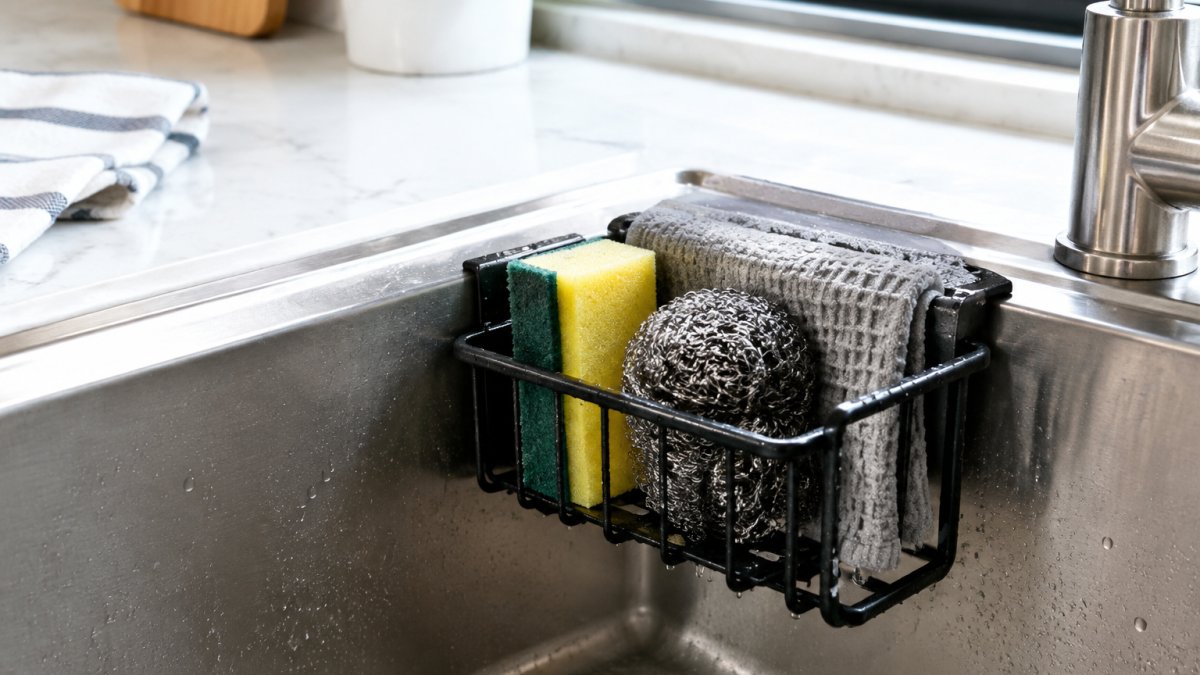
Sink-Mounted and Countertop Racks
A sink-mounted rack straddles the sink edge or sits in the basin corner. The advantage is that drips fall straight into the drain instead of pooling on your counter. Our Sink Splash Guard and Drain Storage Rack Holder is built for this: dedicated spaces for scourers, scrubbers, sponges and dishcloths, plus a splash guard design that protects surfaces from water. It weighs 0.17 kg and comes in blue, green, white and orange.
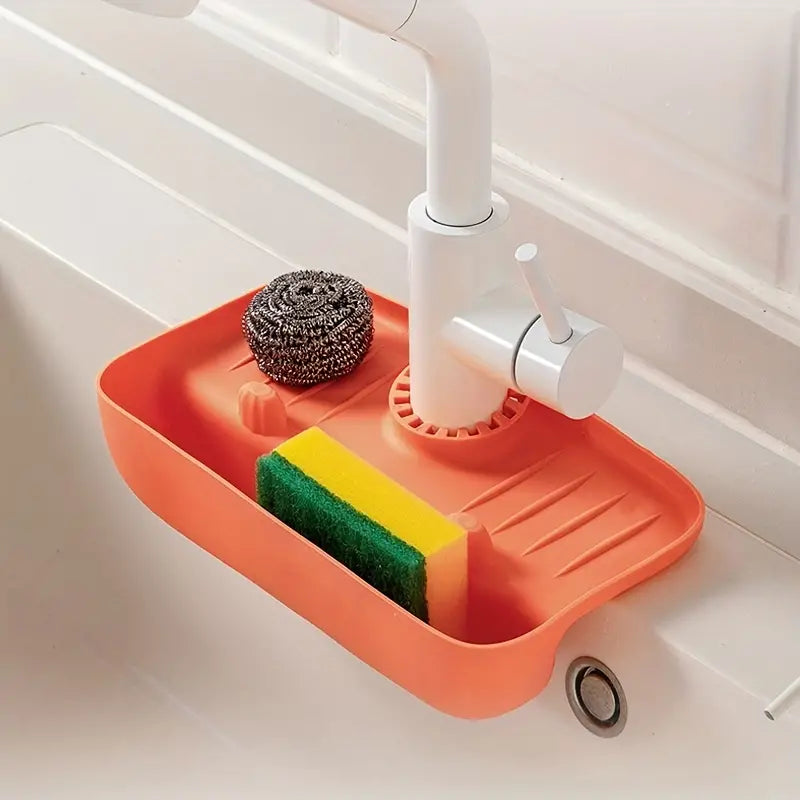
The trade-off is real. A sink-mounted rack eats into basin space, which matters in a narrow sink. Countertop caddies avoid that but collect water underneath unless they have proper drainage holes.
Suction-Cup and Adhesive Options
Suction cups work on smooth, non-porous tile or stainless steel. They fail on textured ceramic, matte finishes and grout lines. Adhesive mounts hold better on rough surfaces but are close to permanent once set. If you rent, think twice before committing.
Best for: small kitchens where counter space is gone. Skip if: your sink has no flat, smooth mounting surface.
How to Store Dish Sponges So They Dry Faster
Storing a dish sponge so it dries faster comes down to three things: position, airflow and drainage. A sponge left flat on the sink bottom stays wet for hours. A sponge stood on edge with air on both faces dries far quicker.
Try this routine:
- Squeeze the sponge out fully after every use, then shake it once.
- Stand it on its narrow edge in the holder, never flat.
- Keep the holder clear of the backsplash so air moves behind it.
- Rinse the holder itself weekly; residue builds up in the drainage tray.
- Replace the sponge on a regular schedule regardless of how well it dries.
That last point is the one people skip. No holder extends a sponge's working life indefinitely. Drying slows the decline; it does not stop it. The NSF International guidance on sponge and kitchen surface sanitation treats sponges as a high-risk item for a reason.
Sink Sponge Holder Suction: What Actually Sticks
Suction performance is where most sponge holder complaints originate, and the reason is mechanical rather than mysterious.
What works reliably: glazed ceramic tile, polished stainless steel, glass, smooth acrylic, and factory-finished quartz or solid-surface backsplashes. What fails: matte ceramic, tumbled stone, grout lines, painted wood, brushed or hammered metal, and any surface with a curve or flex.
Before you mount anything, clean the surface with a degreaser and let it dry completely. For a surface that will not take suction, heavy-duty adhesive hooks are the practical fallback, and we carry heavy duty clear adhesive hooks for kitchen and bathroom for exactly that situation.
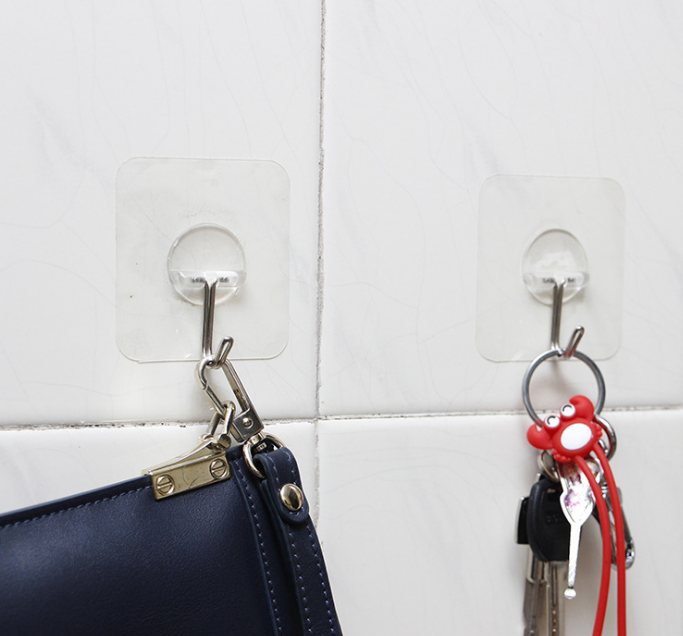
Watch out: mounting a suction holder on a wet, freshly wiped tile is the single most common reason people conclude "these things never stick." Dry the wall first, and re-seat the cup every few weeks as part of your sink cleaning routine.
If your sink area stays steamy, an adhesive mount or a countertop caddy will outlast a suction cup even on a surface that technically accepts suction. That is not a defect; it is the physics of the seal.
Silicone Sponge Holder for Kitchen Sink: Pros and Cons
A silicone sponge holder is a flexible tray or cradle that sits in the sink or on the counter. It is the cheapest entry point into the category, and it has clear strengths and clear limits.
Pros:
- Will not rust, chip or scratch the sink
- Flexible, so it fits awkward corners and uneven surfaces
- Rinses clean in seconds and goes in the dishwasher
- Quiet and lightweight; nothing to install
Cons:
- Traps water in the tray if drainage holes are shallow or missing
- Can slide around in the basin when wet
- Soft walls may not hold a heavy scrubber upright
- Silicone discolors over time with certain cleaning chemicals
Silicone is the right pick for renters, small sinks and anyone who wants zero installation. It is the wrong pick if you need a fixed, stable spot for a heavy scrubber and a bottle brush.
Picking the Right Holder for Your Sink and Household
Match the holder to the sink first, then to the household. That order matters more than brand or color. Measure the sink's inner width and the flat rim depth before you buy anything, because a rack that straddles the edge on a deep basin will not sit level on a shallow one.
| Sink or household situation | Recommended style | Why it fits |
|---|---|---|
| Narrow sink, no counter space | Sink-mounted rack | Uses the basin edge, drains directly |
| Smooth tile backsplash | Suction-cup holder | No drilling, easy to relocate |
| Textured or matte wall | Adhesive mount | Holds where suction fails |
| Rental kitchen | Silicone tray | No installation, no damage |
| Heavy scrubbers and brushes | Rigid countertop caddy | Stable walls, holds weight |
| Busy family, multiple tools | Multi-slot rack | Dedicated slots for each item |
Household size changes the capacity you need. A single person needs room for one sponge. Our telescopic sink rack adjusts to fit the sides and front of the sink and includes a towel holder.
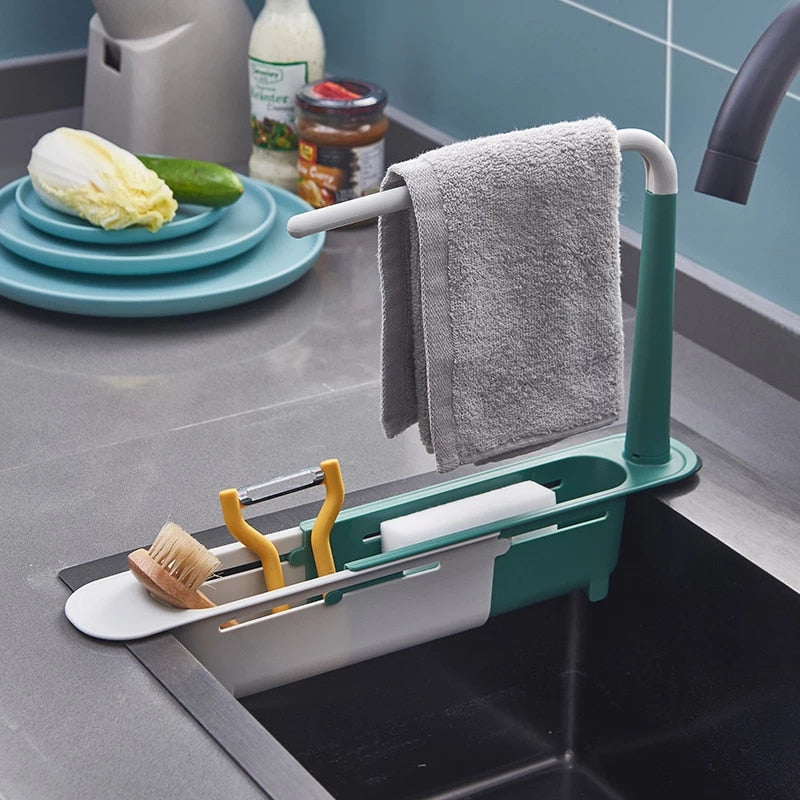
Here is the part most guides skip: a holder is not the only way to solve a wet sponge, and sometimes it is not the best value. A simple drying rack you already own can work if the sponge stands on edge.
For a full plan on fitting this into a tight kitchen, our guide on how to organize small kitchen countertops walks through the layout step by step.
Are Sponge Holders Worth Buying? The Verdict
Worth it, with conditions. Our kitchen and home solutions collection covers the options in one place if you want to browse.
If your sponge already dries on a clean rack and your sink stays tidy, you do not need one. That is the honest answer, and we would rather say it than sell you a gadget that ends up in a drawer.
The middle ground is where most people land: a modest holder that keeps tools off the sink bottom and out of the way. Start there. Upgrade only if you outgrow it.
Ready to get your sink working the way it should? Quavendo.com stocks a sink-side rack with dedicated slots for sponges, scrubbers and dishcloths, a splash guard that protects the surface behind it, and easy drainage so tools dry between uses. Browse the collection and pick the color that fits your kitchen.
Frequently Asked Questions
Is a sponge holder necessary?
Not strictly. A sponge can dry on the sink edge or a small dish, and one review noted the gadget is practical but probably not essential. What a holder does add is a fixed spot for sponges, scrubbers and dishcloths, plus drainage holes that let water run off instead of pooling underneath. If your sink bottom stays wet and cluttered, a holder solves a real annoyance. If your sponge already dries between uses, you can skip it.
Do sponge holders help sponges dry faster?
They can help, but drainage and airflow matter more than the holder itself. A rack with open holes at the bottom lets water drip away, and an open design lets air reach the sponge on more sides than a flat countertop does. A closed cup or a solid tray traps moisture and works against you. Look for hollow or slatted designs, and rinse the holder regularly so residue does not build up.
Why won't my sponge holder stick?
Suction cups and adhesive mounts fail for predictable reasons: a textured or damp surface, soap film left on the tile, or too much weight in the holder. Clean and dry the surface fully before mounting, press the suction cup flat and give adhesive pads a day before loading them. If your sink surround is porous or uneven, a countertop or telescopic rack that rests on the sink edge is the more reliable choice.
How often should you clean a sponge holder?
Rinse it every time you wash dishes and give it a proper clean once a week. Food residue and soap scum collect in the drainage holes and corners, and that film is what starts to smell. A holder that lifts out or has an open frame is quicker to rinse than one with narrow slots. Pair the weekly clean with replacing your sponge regularly, since the holder only improves drying, not the sponge itself.


