


Family meal prep works best when it is small, repeatable and set up so that food is easy to find and safe to eat. Start with two or three dinners, cook components that can become several meals, and give every dish a container and a place in the fridge. The cooking is only half of the job. The other half is the kit and the organisation around it, and that is where most good intentions fall apart by Wednesday.
This guide takes you through a realistic first week, the methods that suit different households, how to keep everyone interested, and how to store and reheat food safely. At the points where the right kitchen equipment makes the routine easier, we say so.
TL;DR
- Begin with two or three meals, not a full week. Both Harvard’s Nutrition Source and Good Housekeeping advise this.
- Choose a method to suit your home: batch cooking, portioned meals, or prepped ingredients you assemble differently each night.
- Cool food quickly, label it with the date, and keep cooked leftovers in the fridge for three to four days at most, or freeze them. Rice needs extra care: eat it within 24 hours.
- Clear containers, a tidy fridge and accurate portioning stop prepped food from being forgotten, and our Kitchen & Home Solutions range is built around exactly that.
Table of Contents
- What family meal prep actually means
- Before you cook: a ten-minute check
- Your first week: a realistic plan
- Which method suits your household?
- Adapting to your household
- Storing and reheating prepped food safely
- Keep the kitchen set up for the routine
- Equipment for a smoother prep day
- FAQ
- Sources
What family meal prep actually means
Meal prep is planning, preparing, sometimes cooking, and storing meals or snacks for later. Maricopa County’s public health guide says it can save time and money, cut food waste, support better food choices and lower last-minute stress.
For a family, that does not mean twenty identical lunchboxes lined up on a Sunday. It can be as modest as:
- cooking a double batch of bolognese so one half goes in the freezer;
- roasting a tray of vegetables on Sunday and using them in three different dinners;
- chopping peppers, carrots and cucumber so the after-school snack is already done;
- making overnight oats for the school run.
Harvard’s guide stresses that there is no single correct system. Some households start with a shopping plan, some with cooking ahead, some with a schedule on the fridge door. Pick the entry point that matches what you already do.
Before you cook: a ten-minute check
The quickest way to waste a prep session is to cook food nobody wants, or to find you have nowhere to put it. Maricopa County suggests checking food preferences, allergies, fridge and freezer space and pantry stock before choosing the week’s meals. In practice:
- Count the plates. Michigan State University Extension recommends noting how many people will be home for each meal and planning around the ones eaten away from home, such as school dinners or late evenings at work.
- Ask for favourites. Harvard suggests talking through family favourites and, if it helps, using recurring themed days. Pasta Monday and jacket potato Thursday remove a decision every week.
- Look at your storage. Check how many containers you own, whether the lids match, and what will physically fit in the fridge. This step is the one most guides skip, and it decides whether the plan survives.
- Shop your cupboards first. Write the grocery list after you have seen what you already have.
Give prepped food a home
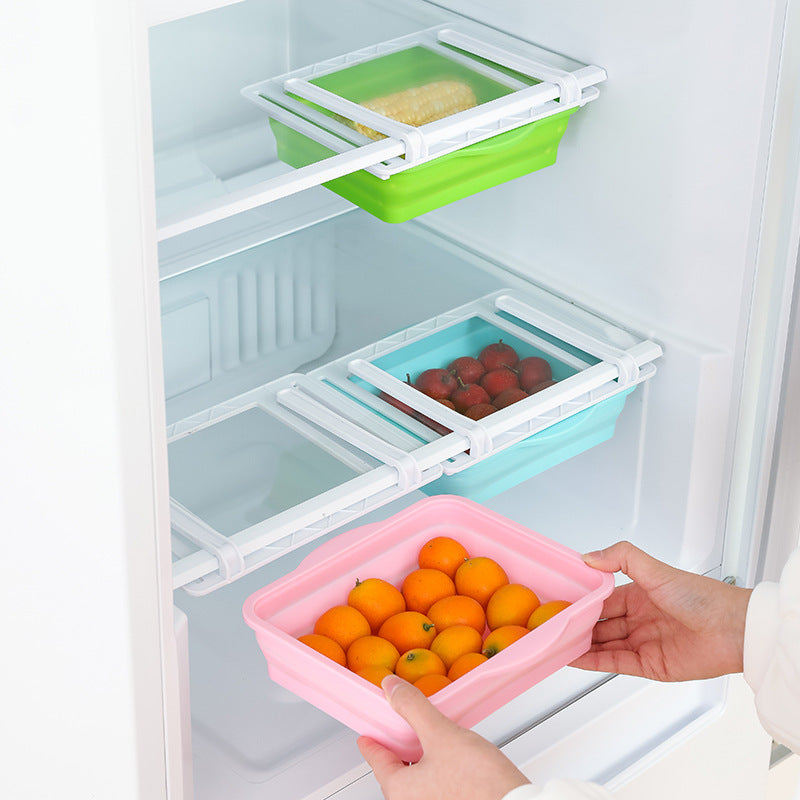
A fridge full of mismatched tubs is how leftovers get lost and thrown out. A fridge organiser with foldable transparent storage boxes gives each category, such as snacks, cooked dinners and chopped veg, its own visible spot. If you want a full walk-through of what goes on which shelf, our guide to refrigerator organisation, step by step covers it.
Your first week: a realistic plan
The advice from the sources is remarkably consistent: go small. Cleveland Clinic recommends choosing a meal you struggle to eat well, starting with two or three meals rather than five or six, syncing the plan with your schedule, choosing simple recipes that reuse ingredients, and starting with the foods that take longest to cook. Harvard suggests beginners plan dinners for two to three days rather than a whole week.
Here is how that looks for a family of four on a typical week.
Step 1: choose one problem meal
For most families it is the weekday dinner after work and school, or the rushed breakfast. Fix that one first. Good Housekeeping also recommends starting with one mealtime and prepping for two or three days before attempting five.
Step 2: pick familiar recipes
K-State Extension agent Chelsea King, speaking to Kansas State University in November 2026, recommends starting from family favourites and adding one new recipe a week, so you grow variety without rebuilding the menu from scratch. Familiar food also gets eaten, which matters more than any plan.
Step 3: write a short list, then cook the longest items first
A joint of chicken, a tray of roast vegetables and a pan of grains take the longest, so they go on first. While they cook, you can chop, portion and assemble. Food & Wine advises choosing a prep day that fits your household’s schedule and favouring simple dishes or batch recipes that freeze well.
Step 4: portion, label, store
Portioning by eye is where prepped meals drift: too much rice for the little ones, too little protein for the adults. Measuring once saves a lot of waste, and an LCD digital kitchen scale spoon makes it quick to measure out grains, sauces and snacks consistently. Then label every container with what it is and the date it was made.
Step 5: review on day three
What did the family eat, and what came back untouched? Swap out the losers and keep the winners. Next week, add a fourth meal.
Which method suits your household?
There are several common approaches, and families often mix them. EatingWell lists make-ahead complete meals, batch cooking for the freezer, individually portioned meals and ready-to-cook ingredient prep. Connecticut Children’s adds snack and drink prep, such as chopped vegetables and marinated meat.
| Method | Best for | Examples | Watch out for |
|---|---|---|---|
| Batch cooking | Busy weeknights, freezer stock | Soups, chilli, casseroles, bolognese | Freezer space and clear labelling |
| Portioned meals | Packed lunches, different appetites | Rice and chicken bowls, overnight oats | Needs enough matching containers |
| Ingredient prep | Fussy eaters, varied tastes | Roast veg, cooked grains, chopped salad veg | Soft veg go limp sooner |
| Snack and breakfast prep | Parents of school-age children | Cut fruit and veg, egg muffins, oats | Short fridge life for cut fruit |
Cook once, eat twice
The American Heart Association recommends doubling recipes, filling the oven while it is on, reusing ingredients across dishes and freezing soups, stews and chilli. The principle is leverage: one extra pound of mince or one more tray of vegetables yields another meal for very little extra effort.
A sample week from one roast chicken
The University of Utah’s back-to-routine guide turns a roast chicken, grains, vegetables and overnight oats into bowls, tacos, wraps and soup across the week. A UK version might look like this:
- Sunday: roast chicken with seasonal veg. Cook extra rice or potatoes, and cool and chill what is left straight away.
- Monday: chicken and veg wraps with the leftover meat.
- Tuesday: fried rice using the chilled rice (eaten within 24 hours, see the safety section below).
- Wednesday: soup made from the carcass and any leftover vegetables.
- Thursday: pasta night, using sauce you froze from a previous batch.
One roast, five different dinners, and only one real cooking session.
Adapting to your household
Meal prep is not all-or-nothing. K-State’s report says it can work for households of two or six, and that you should adapt batch size and frequency to your needs.
Small households and couples
Halve recipes or freeze half portions. Individual portions in smaller containers work well, and a few freezer-friendly dinners mean a spare night when you do not feel like cooking.
Families with young children
SELF’s example of a dietitian prepping for two adults, a three-year-old and a nine-month-old uses shared ingredients such as salmon, quinoa and sweet potatoes, turned into several combinations and stored in separate airtight containers. The lesson is to prep components, not rigid plated meals, so each person can take what suits them.
Different tastes and ages
Michigan State University Extension suggests letting family members customise their dishes: taco bars, build-your-own bowls and baked potato toppings all work. It also recommends including quick fallback options such as pasta or breakfast for dinner, so one failed plan does not become a takeaway.
Get the children involved
Michigan State University Extension frames age-appropriate task sharing as both practical help and a way for children to learn food skills. Younger children can wash vegetables, stir, or sort containers and lids. Older ones can measure, chop with supervision and label. If you want a bit of fun in the kitchen, our Fun, Games & Outdoors range has something for after the washing-up is done.
Beating the boredom
Eating the same dinner four times is the main reason people give up. Good Housekeeping recognises this and suggests changing the spices, dressings or condiments on repeated components, or switching from complete meals to flexible ingredients. Cooked chicken is a curry on Monday and a salad on Tuesday.
Storing and reheating prepped food safely
Food safety is the part of family meal prep that matters most, especially with small children in the house. Most of the numbers below come from US public health and university sources, so we give the UK Food Standards Agency (FSA) rule where there is one.
Containers, labels and cooling
Maricopa County advises storing food in airtight containers or resealable bags, portioning it for its intended use, and labelling it with contents and date. Refrigerate cooked meals as soon as possible. Colorado State University Extension says to put leftovers in shallow containers within two hours, which helps them cool faster.
Transparent containers make labelled, date-stamped food easy to scan at a glance. Our transparent plastic food storage containers for grains suit dry ingredients such as rice, pasta and oats, while silicone stretch lids cover bowls, cut fruit and part-used tins in the fridge.
How long food keeps
| Food | Fridge life | Source |
|---|---|---|
| Cooked meat, fish, poultry, soups and stews | 3 to 4 days | Harvard |
| Cooked beans and hummus | 5 days | Harvard |
| Hard-boiled eggs, airtight chopped vegetables | 1 week | Harvard |
| Cut hard veg (carrots, broccoli) | About 1 week | Maricopa County |
| Cut soft veg (peppers, courgettes) | 2 to 4 days | Maricopa County |
| Cut strawberries, pineapple, melon | About 4 days | Maricopa County |
| Cooked rice | 24 hours | Food Standards Agency |
The Harvard figures assume a fridge at 40°F or below. In the UK that is about 5°C, so check your fridge with a thermometer if you are unsure.
Rice needs special care
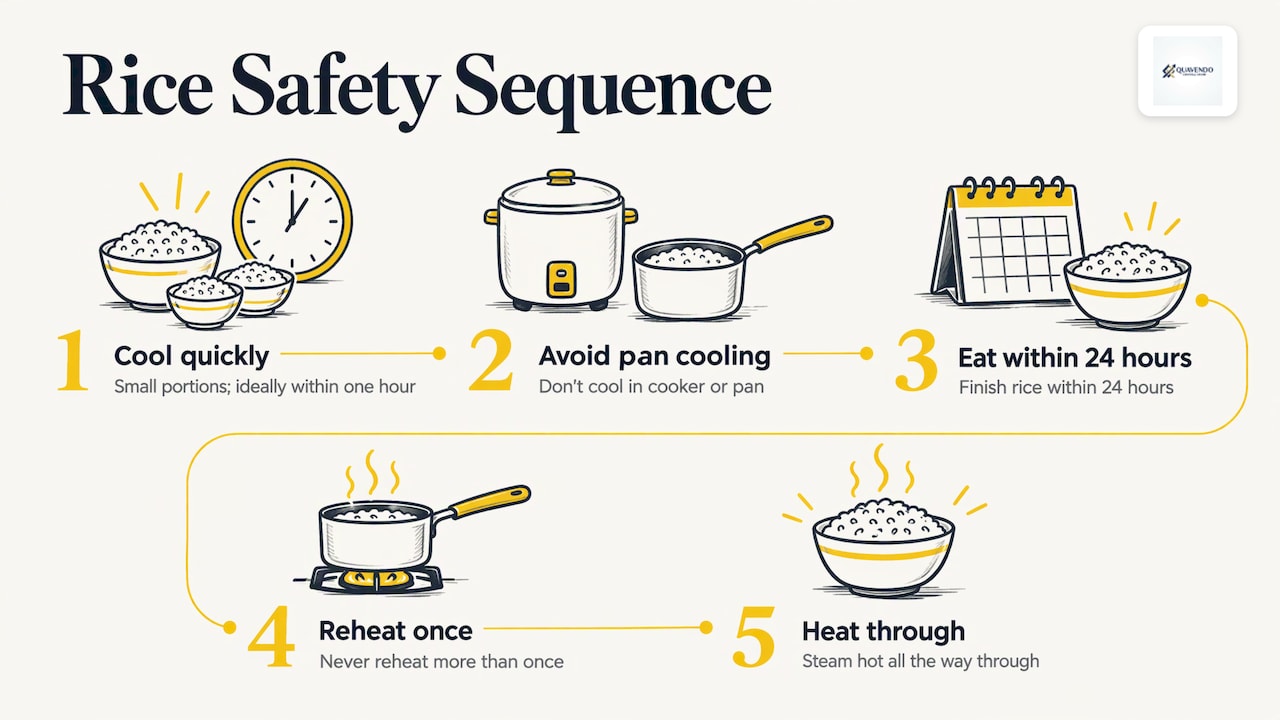
The FSA says rice should be chilled as quickly as possible, ideally within one hour, and eaten within 24 hours. Dividing it into smaller portions helps it cool faster. Do not leave it in the rice cooker or pan to cool, and never reheat it more than once. Make sure it is steaming hot all the way through when you do.
Freezing and thawing
Maricopa County gives a freezer life of three to six months depending on the food. Harvard notes that cooked meals often freeze well in airtight containers, but high-moisture foods such as salad leaves, tomatoes and watermelon can turn mushy after thawing. Thaw in the fridge, not on the worktop, and reheat only the amount you need. Colorado State University Extension advises reheating leftovers to 165°F (74°C).
If you are pregnant, cooking for a baby, or feeding someone with a weakened immune system, ask your GP, midwife or health visitor about food-specific guidance before relying on stored leftovers.
Keep the kitchen set up for the routine
A prep session needs counter space, a clear fridge and containers that actually fit. Three small changes help:
- Clear the worktop first. Our guide to organising small kitchen countertops shows a step-by-step plan for making room to chop, portion and pack.
- Make pots and pans easy to reach. Batch cooking uses the big pans, and an under-cabinet pull-out pots and pans organiser with adjustable dividers keeps them and their lids in one place.
- Plan the fridge in zones. Cooked meals on one shelf, snacks at child height, raw ingredients below.
Equipment for a smoother prep day
Quavendo sells household and kitchen products designed to reduce hassle and clutter, and the kitchen range covers the points in this routine where families most often get stuck: storing grains, covering bowls, organising the fridge, portioning accurately and keeping cupboards tidy.

Browse the full Kitchen & Home Solutions collection to set up your prep routine, or see our guide to practical gifts for busy mums if you are shopping for someone else who does the family cooking.
FAQ
How do I start meal prepping for a family?
Choose one meal that causes the most stress, usually weekday dinner, and prep two or three days of it. Use familiar recipes, write a grocery list and cook the longest-cooking items first. Add one new recipe a week as you get comfortable.
How long does prepped food last in the fridge?
Cooked meat, fish, poultry, soups and stews keep for three to four days in a fridge at or below 40°F (about 5°C), according to Harvard’s guide. Cooked rice should be chilled within an hour and eaten within 24 hours, per the Food Standards Agency. Freeze anything you will not use in time.
Is it cheaper to meal prep for a family?
Meal prep can save money, since public health guidance such as Maricopa County’s links it to less food waste and fewer last-minute purchases. The savings come mostly from planning a list, using up ingredients and cooking in bulk. How much you save depends on what and how you cook now.
How do I stop my family getting bored of prepped meals?
Prep components rather than complete meals, and change the spices, dressings and sauces. Theme nights and build-your-own dishes such as tacos or bowls let everyone customise what they eat. Adding one new recipe a week also keeps the menu fresh.
Can I freeze family meals?
Yes. Soups, stews, chilli, casseroles and sauces freeze well in airtight containers, and Maricopa County gives a freezer life of three to six months depending on the food. Label with the date, thaw in the fridge and reheat only what you need. Salad leaves and tomatoes do not freeze well.
Sources
- Meal Prep, Maricopa County
- Meal Prep Guide, Harvard The Nutrition Source
- How To Healthy Meal Prep: A Beginner’s Guide, Cleveland Clinic
- Meal prepping for every household, Kansas State University
- How to Meal Prep for the Week, Good Housekeeping
- How to Meal Prep and Meal Plan for the Week, Food & Wine
- Planning Family Meals, Michigan State University Extension
- A Beginner’s Guide to Meal Prep, EatingWell
- Meal Prep Made Easy, Connecticut Children’s
- Make Family Meals Easier, American Heart Association
- Back-to-Routine Meal Prep, University of Utah
- How a Registered Dietitian Meal Preps for Her Whole Family, SELF
- Utilizing Your Slow Cooker, Colorado State University Extension
- Home food fact checker, Food Standards Agency


